“Facilitating & Writing” Seminar, 2
Presentation at the Joint Seminar on Leading Writing Workshops, organized by UMPV & AMU
Leading & Writing, Part 2: From Writing Workshops to Personal Workshops in the Age of Digital Technology and AI.
Friday, May 29, 2026 – 10:00 a.m.–5:00 p.m.
Paul-Valéry University of Montpellier (Saint-Charles 2 Campus – Auditorium)
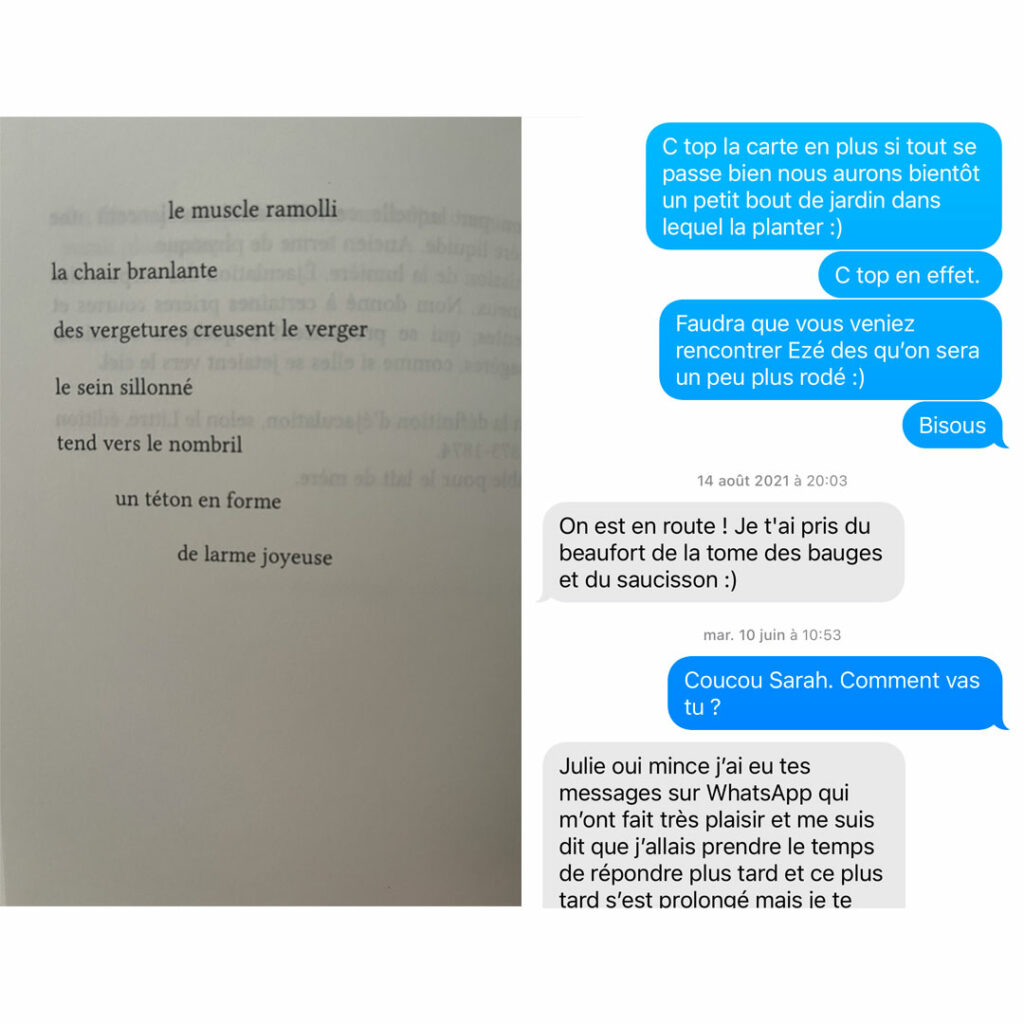
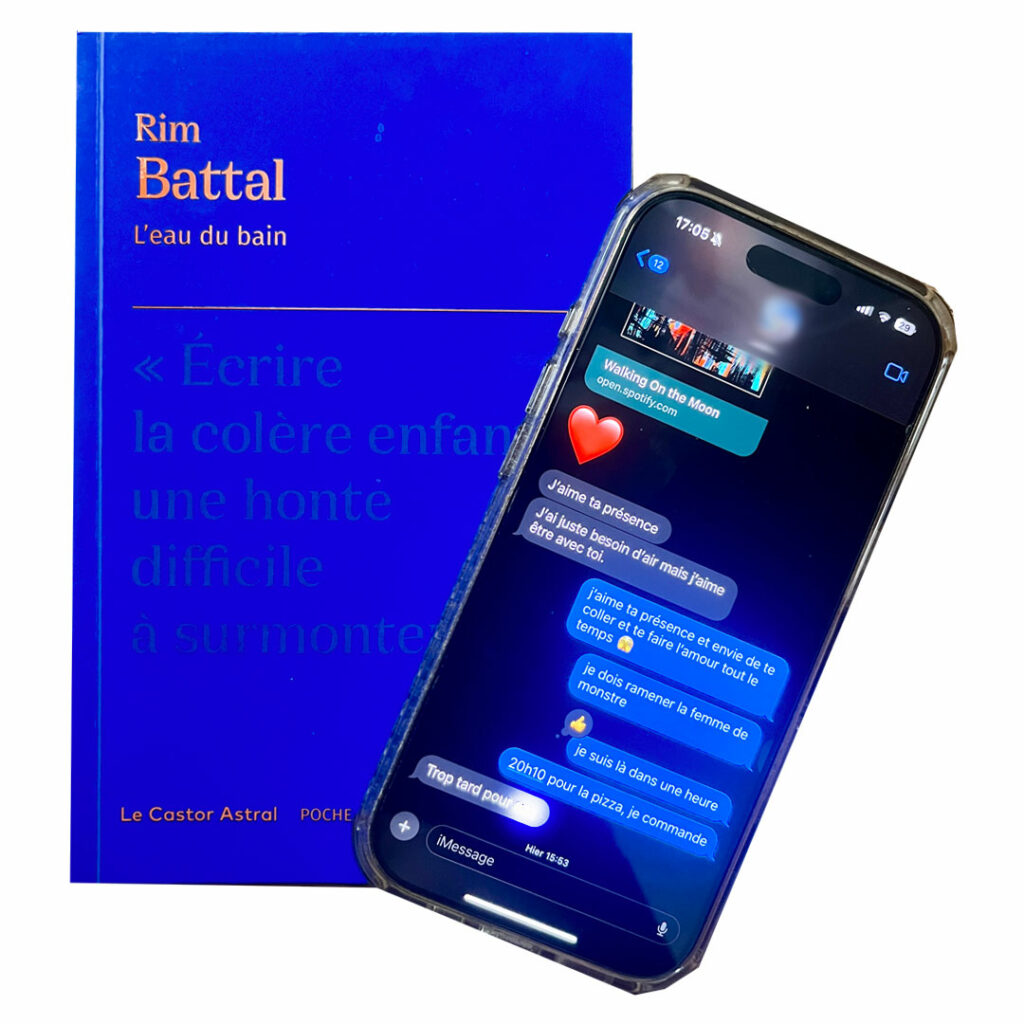
It is often said that we no longer write or read. It is true that we read fewer books and hardly ever write by hand anymore. Yet, every day—sometimes for hours—we read and write very short texts: text messages, chat messages, comments, and social media posts. The “SMS Poetry” workshop takes this reality as its starting point, bringing together these brief, everyday forms of writing and the art of poetry. It poses two direct questions: Could comment threads evolve into a literary form? Could our chat exchanges rival the great correspondences of the past? It also seeks to open up creative writing to audiences that typically steer clear of writing workshops—particularly young people—and to foster collaboration between generations divided by the digital age: those who primarily knew the pre-digital era, those who have known only the post-digital world, and my own generation, which lived through the transition.
I delivered a fifteen-minute presentation remotely to an audience gathered in Montpellier. I introduced the “SMS Poetry” concept and the two-hour writing workshop format—an approach I have previously conducted in person on several occasions. The first exercise involves manually composing a fictional text-message-style exchange using excerpts from poems, while the second entails rewriting a real conversation from one’s own phone into a poetic form. This method allows participants to deconstruct both poetic structures and the brevity of text messaging, exploring the interplay between these two worlds to create “SMS Poetry” texts.
The remaining time allowed for testing a fully digital, collaborative version of the format. Without any preparatory exercise, participants were invited to immediately engage in a collective poetic exchange via instant messaging. They formed groups based on personal affinity and created their own WhatsApp groups. Each group initiated the exchange using one of the four proposed fragments, sending it as-is for the first message. These fragments were drawn from etaïnn zwer’s Bleu nuit, Blouson rose:
tu vois dans les contours des enfermements.
quand tu te brûles ou te coupes tu crois t’échapper un peu.
ta peau te clôture.
le plaisir est devenu un truc que je prépare pour d’autres gens
bien rangé une fois qu’ils sont partis
Those who consented added me to their group so I could collect the texts. Three conversations reached me this way.
The most extensive one involved three participants: around thirty messages in six minutes. It opens with “Your skin encloses you,” immediately met with the question, “What do you mean?” Three stances emerge. One voice moves forward in verse (“Skin against skin against death”), another comments using everyday language (“xxx, are you okay?”), and the third lets sounds slide. The speed of the messaging app does the rest, and the conversation begins to rhyme:
Et nos corps nouent
Et la peau est moite
Et nos corps jouent
Et nos voix
Vouent nos corps
Aline à la plage
Bouent nos corps
C’est pas moi c’est mes doigts (dit Sandra)
Bouée nos corps
Next come “Écrabouillent” [They crush], “Écrin” [Jewel case], “Écrevisse” [Crayfish], “Échevin” [Alderman], and “Écran noir” [Black screen], leading to the observation: “This conversation is taking on water.” The keyboard itself gets in on the act: “witch’s cauldron” turns into “marmot” in the very next message—leaving it unclear whether it was the hand or the spell-checker that made the choice.
The second group wrote three messages in three minutes: “Pleasure has become a thing,” “Blurred outlined outlined,” “Furtive fictitious?” Here, every send is carefully weighed, and the final message gives a nod to the Ateliers furtifs [Furtive Workshops], who were present that day. In the third group, the fragment “neat and tidy” turns into domestic comedy: a “big head full of yogurt,” an “O R G A N I C !!!???!?!” answered by “O-r-g-a-n-i-c: Iconic Shift into the Olive Trees.” The last message picks up a phrase from my presentation—”Imaginary Emancipation”—and then confesses to a typo that became a stroke of genius: “I had written ça t’en biche oh ma biche [that makes you happy, oh my dear]…”
What can we take away from these ten minutes? First, that the tool shapes the form. The brevity of the bubbles, the rhythm of the messages, the rapid-fire punctuation, and the whims of the spell-checker create effects that the written page would not have elicited. The machine thus plays a role in the writing process, but as an accident to be either embraced or corrected—never as a substitute for the writers themselves. Furthermore, the text belongs to no one: it emerges from the act of addressing and responding, and the relationship between individuals constitutes its very substance. There is a built-in safeguard: to write together, participants must first share their phone numbers and consent to having the text collected.
The “SMS Poetry” initiative introduces variety into the landscape of creative writing workshops. It blends digital writing forms—such as concise text, online comments, and discussions—with literature. The normalization of this new mode of writing could enrich digital interactions and, perhaps, even curb the spread of hate speech.
To take this further: how would AI respond if we addressed it with poetic prompts?